
Most people still think gambling addiction is about weak discipline. The reality is more sobering: modern betting apps and online casinos are built around the biological systems that control human anticipation, stress, and reward. The industry understood long ago that the brain reacts more strongly to uncertainty than to winning itself.
That is why a player can lose ten times in a row and still press the button again. Near-misses feel like progress. Instant deposits remove the pause that might otherwise prompt a second thought. Fast betting cycles trap the brain in a loop where logic gradually stops mattering. At some point, it is no longer about the money. It becomes about the suspense, and the possibility that the next spin might change everything.
Responsible gambling in 2026 means understanding those mechanisms and making deliberate choices in response. It is about playing with intention, with clarity, and with the right tools in place before a session begins. The ten steps below are practical, evidence-informed, and designed for players who want to stay in control of their experience.
Responsible gambling refers to the practices that ensure gaming remains enjoyable and does not lead to harmful behaviours. It emphasises a balanced approach to gaming, where individuals can consider options like an online casino while participating in a way that does not jeopardise their financial health or emotional well-being. This concept encourages players to engage in gaming activities with a clear mindset, recognising the entertainment aspect without allowing it to become a source of stress or financial burden.

The most effective spending limit is one decided before a session opens, not during it. The dopamine loop described above makes in-the-moment decisions unreliable. Treating the budget as already spent, not as a ceiling to push against, is a mental shift that takes the pressure off each individual spin or hand. Most reputable online casino platforms offer deposit limit tools within account settings. Setting one takes two minutes and removes one of the most common routes to overspending.
The state a player is in before a session begins matters as much as the tools they use during it. Gambling when intoxicated impairs the decision-making systems the brain relies on to assess risk. Stakes that feel reasonable under the influence rarely are. Gambling when depressed or anxious can feel like an escape, but it makes the dopamine cycle significantly harder to step away from. Gambling to replace income shifts the experience from entertainment to financial pressure, which is one of the most reliable routes to harm. The right moment to play is a calm one, chosen deliberately, with a clear head and a fixed budget already in place.
Short, regular breaks interrupt the dopamine cycle described in the opening of this piece. Stepping away even for five minutes between sessions, gives the prefrontal cortex, the part of the brain responsible for rational decision-making, an opportunity to reassert itself. A break also allows players to reassess their budget and emotional state before continuing.
Extended sessions compress a player's perception of how long they have been playing. Many online casinos offer session time reminders and automatic log-out features. Enabling these before play begins is an important first step. Setting a phone alarm adds a second layer of control regardless of which platform a player is using. When the alarm goes off, the session stops. That boundary is more reliable than any decision made mid-session.
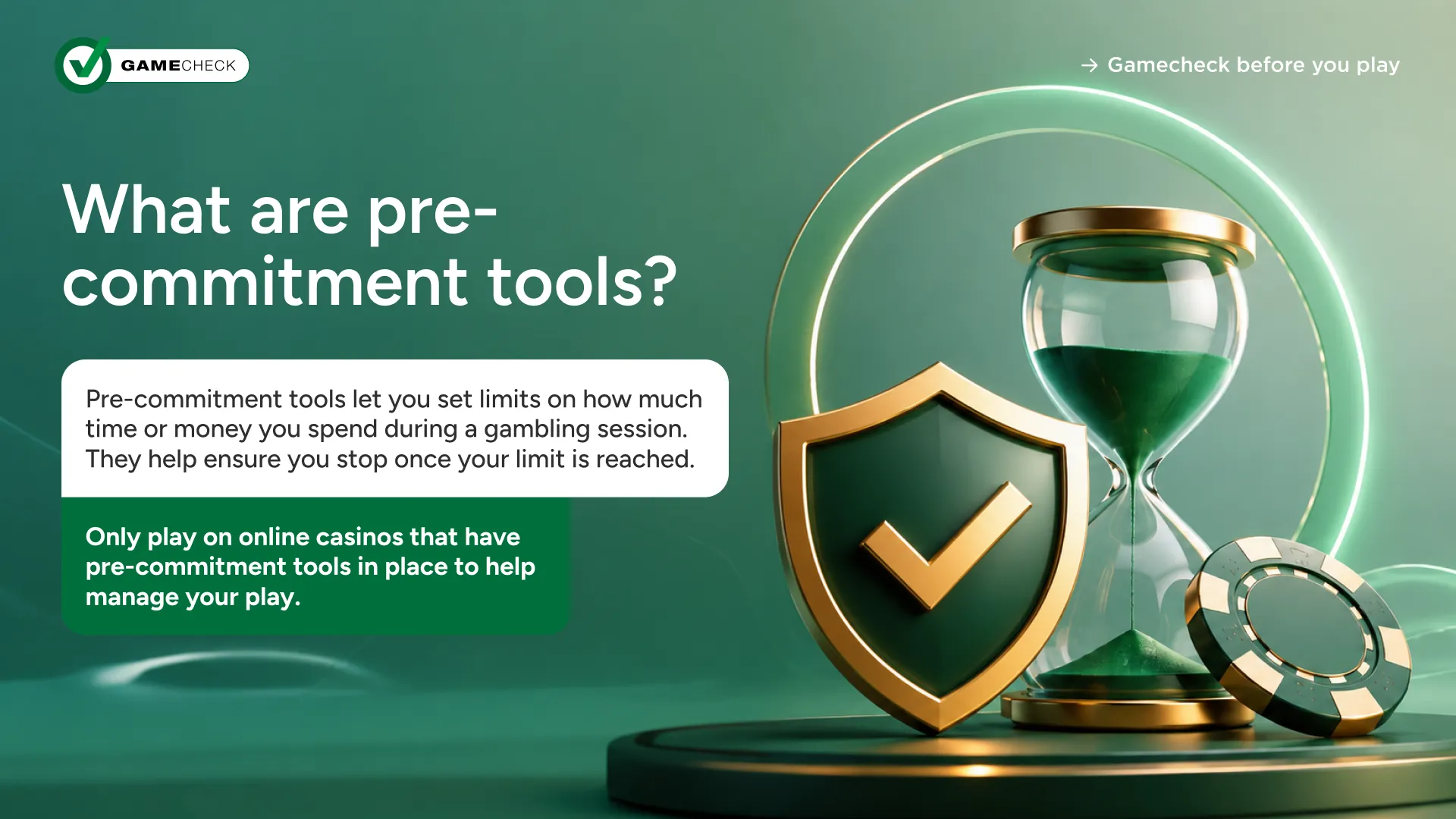
Pre-commitment tools let players set a limit on how much time or money they want to spend. Once the limit is reached, the platform stops play automatically, removing the need to rely on willpower alone. Across Europe, deposit and time limits are a mandatory condition of licensing in most regulated markets, meaning any online casino operating under a recognised European licence, such as those issued by the UK Gambling Commission or Malta Gaming Authority, is required to offer them. Look for the licensing badge in the online casino footer, and make use of the tools before play begins rather than after a problem has already developed.
Loss chasing - increasing stakes after a loss in an attempt to recover, is one of the behavioural markers of gambling harm. The biological mechanism behind it is the same one that keeps players pressing the button: the brain assigns disproportionate weight to the possibility of reversal. Deciding in advance on a loss limit, and treating reaching it as a signal to stop, is one of the most protective decisions a player can make.
Self-exclusion is not a last resort. It is a tool available to any player who recognises that a break would be beneficial. In the UK, GAMSTOP allows players to self-exclude from all online casinos holding a UK licence through a single registration. Similar schemes operate across most European markets. Self-exclusion is not a sign of failure. It is a deliberate, informed decision to take control, and one that reputable operators are required to honour.
Playing responsibly means more than managing time and money. It also means knowing that the games being played are real. Fake online casino games, copies of legitimate titles with altered mathematics and outcomes, represent a serious and growing risk to players. Checking an online casino before depositing is as important as setting a budget.
The Gamecheck search tool is free to use and requires no account. Players can access it at Gamecheck.com before opening any new online casino. Enter the URL of any online casino and receive a live status showing whether the site has been checked, whether real games have been verified, or whether fake games have been detected. Gamecheck tests games and verifies findings with game providers. This is independent, evidence-based verification.
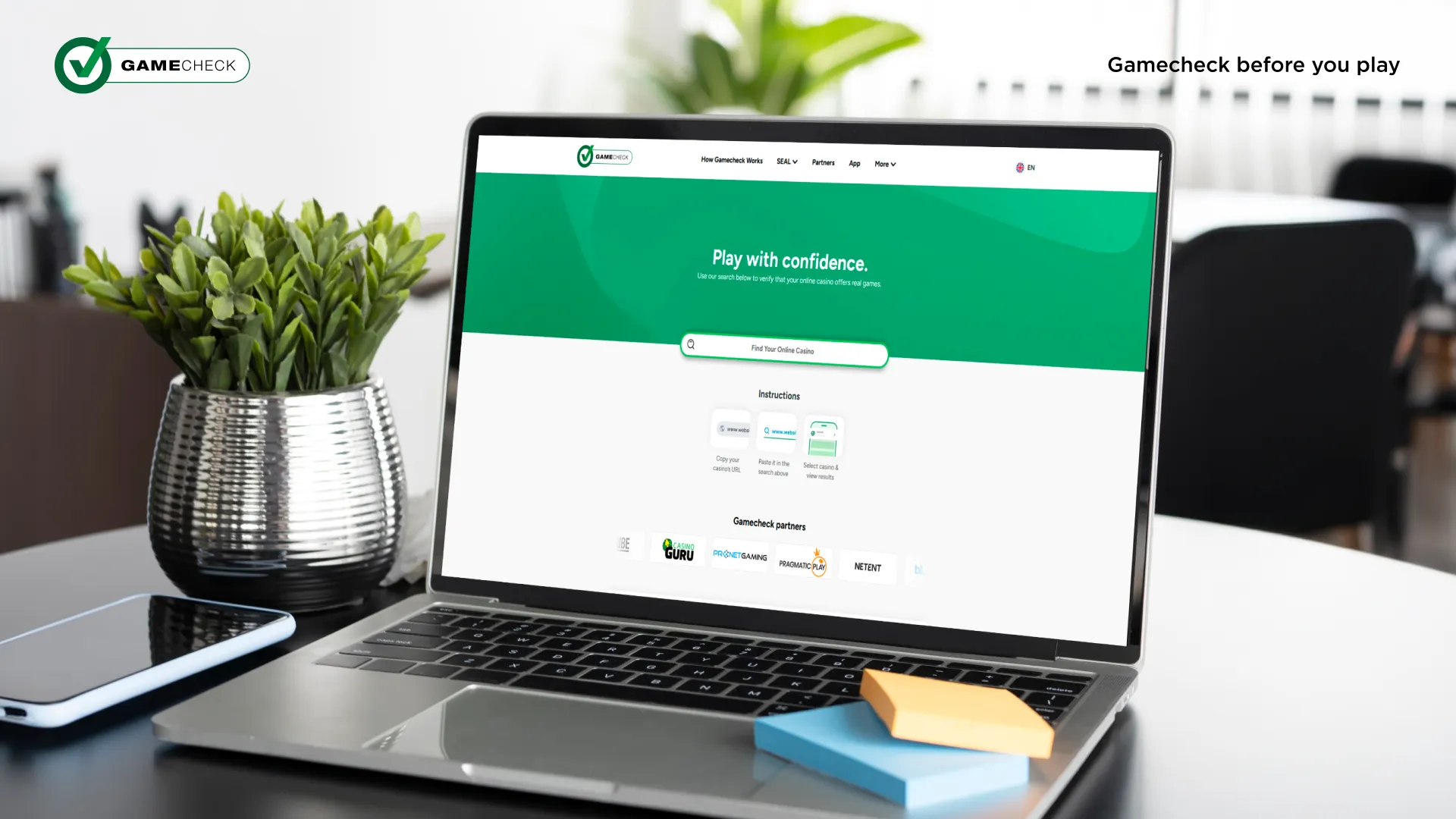
The Gamecheck app is available free on iOS and Android and gives players portable access to the full Gamecheck database. It is also the only authorised method for verifying the Gamecheck SEAL, the trust badge displayed by online casino operators whose games have been checked and verified.
Players can also install the Gamecheck Chrome Extension for in-browser checks. It retrieves live data from the Gamecheck database the moment it is activated on any gaming site, displaying the site name, status, and number of cases reported in seconds. Both tools are free and work together to make verification as straightforward as possible.
The Gamecheck SEAL is displayed in the footer of online casino websites whose games have been verified by Gamecheck in collaboration with original game providers. It is not a visual badge that can be copied or faked: the only way to verify it is through the Gamecheck app, which authenticates the seal in real time. A copied seal is blocked and flagged simultaneously. Seeing the Gamecheck SEAL on an online casino footer and verifying it through the app gives players confirmation that a selection of games has been checked and found to be real.
These ten steps work best when they are in place before a player opens an online casino for the first time. Budget limits, session timers, and self-exclusion tools are most effective when they are set calmly, in advance. Verification tools like the Gamecheck search tool, Gamecheck app, and Chrome Extension provide information that cannot be obtained any other way.
Playing responsibly means playing on platforms that can be trusted, with stakes that have been chosen deliberately, and with the knowledge that support is available if needed. None of that requires giving up the experience. It requires building a few simple habits around it.
Check any online casino before you play at gamecheck.com.
To request verification visit the Gamecheck verification page.