
SBC Summit Lisbon 2026 closed yesterday, 1 October, and for anyone working in player protection, this was a week worth paying attention to. Around 40,000 industry professionals, more than 600 speakers, and over 800 exhibitors filled the Feira Internacional de Lisboa and MEO Arena across three days, from 29 September to 1 October. For the first time, the event carried a dedicated Player Protection Symposium running alongside its main conference stages, and a Player Protection Zone where attendees could see the tools behind that conversation for themselves.
Most of the conversation around player protection focuses on what happens once someone is already playing a game: setting limits, spotting signs of harm, offering support when things go wrong. Far less attention goes to what happens when a player lands on a fake game built to look and feel like the real thing. That is the gap this year's symposium made space for, and it is worth unpacking why it matters to players.
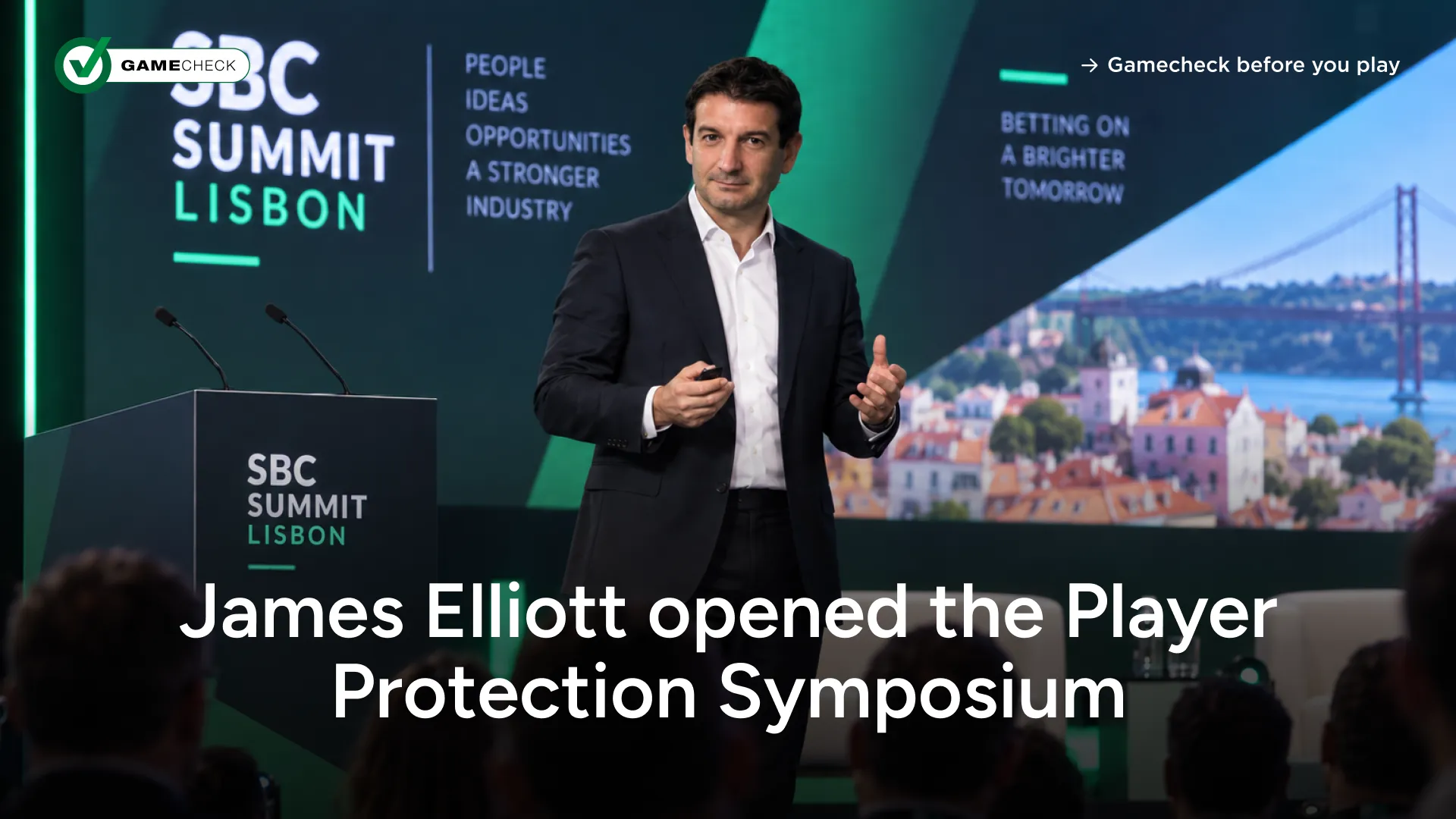
James Elliott, Gamecheck's Founder, opened the Player Protection Symposium on Wednesday 30 September with his session, ‘Innovation in tech: how can technology keep players safe from harm?’. The symposium is built around three themes: balancing regulatory objectives against the black market, the operator's role in safeguarding players, and technology's growing role in identifying and supporting at-risk players. James's session was Gamecheck's contribution to that third theme.
The industry conversation about technology and harm is almost entirely about behavioural analytics: spotting the player whose session patterns look risky before they name the problem themselves. That work matters, and it should keep growing. But there is a second category of harm sitting one layer down that far fewer people are measuring. A player on a fake game is being harmed regardless of how healthy their session data looks. Behavioural analytics was built to watch the player. It was never built to check the product.
Gamecheck monitors more than 43,500 online casinos worldwide, has completed over 257,600 checks to date, and has identified more than 10,000 fake games in the process. In Brazil, an ongoing ten-part investigation has already worked through the first 500 sites of a wider group, after Gamecheck identified 5,000 fake online casinos in the country during the first half of this year. The patterns keep repeating: short-lived domains built to be replaced quickly, interfaces polished enough to pass for established platforms, and similar templates reused across dozens of operators.
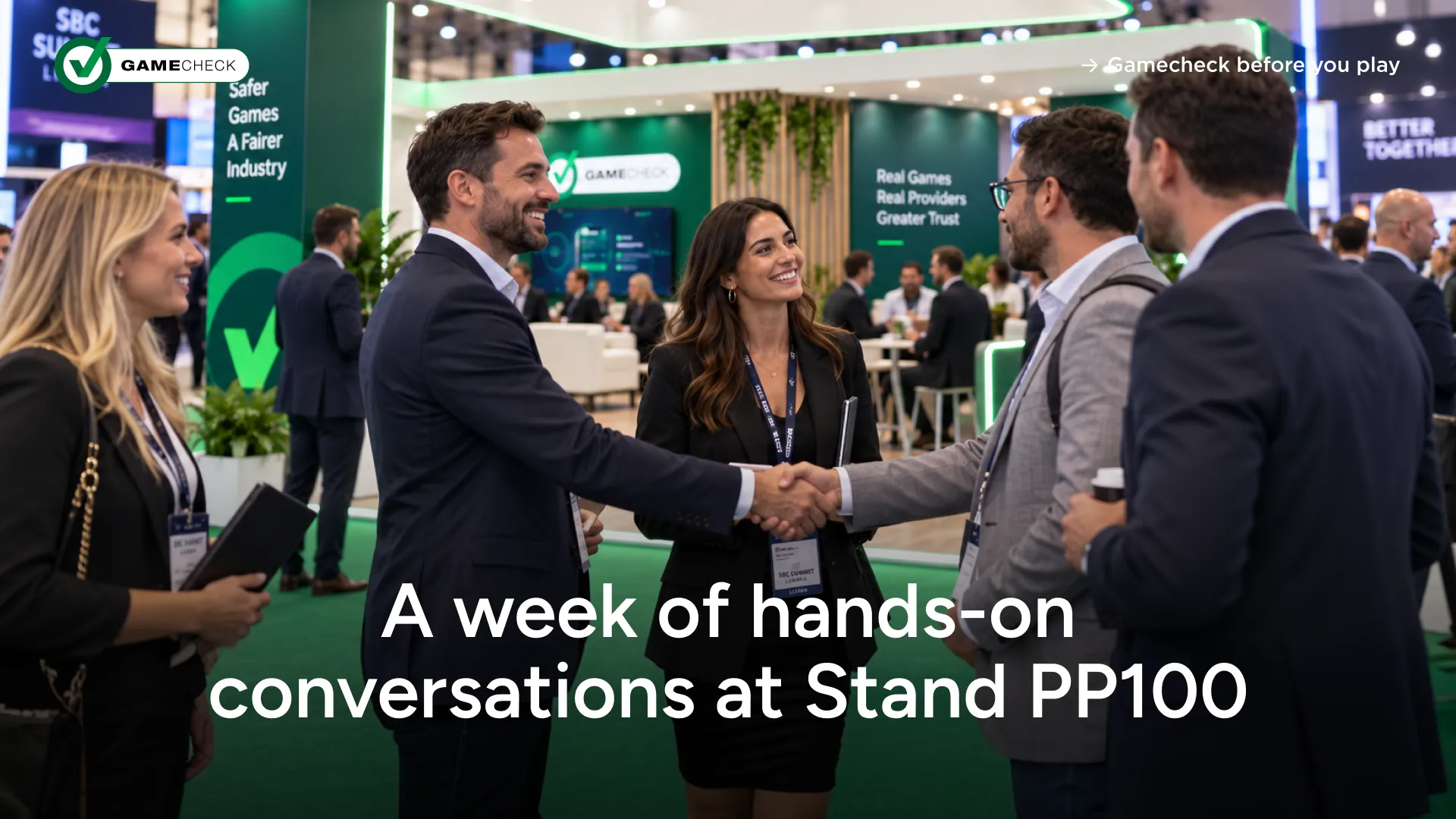
The Player Protection Zone gave attendees a direct look at the tools behind this work. The Gamecheck Stand PP100 was set up from Tuesday and stayed busy throughout the week, with the Gamecheck team walking operators, providers, and regulators through the Gamecheck Search Tool, the Chrome Extension, the app, and the Gamecheck SEAL, a tamper-proof, QR-authenticated badge confirming that a selection of an operator's games have been checked with their original providers and found to be real.
Jack Crabtree, Head of Sales, spent the week speaking with operators considering the Gamecheck SEAL for their own platforms, walking them through what bringing it onto a site would actually involve. Lizzie McDermott, Partnerships Manager, focused her conversations on how existing partners can build Gamecheck's tools into their player protection strategies. Umur Ozan, Creative Strategist, worked through what the Gamecheck message means specifically for the Turkish market, a conversation that drew steady interest across the week. And for operators across Latin America who could not make it to Lisbon in person, Rosa Ochoa continued to lead Gamecheck's business development in that region remotely, staying reachable for Spanish-speaking contacts throughout.
Between the four of them, there was a route in for pretty much any operator, provider, or regulator with questions about where Gamecheck fits into their own player protection plans, and the steady flow at the stand all week suggested plenty of people took that route.
None of this replaces the work already being done around session limits, deposit controls, or self-exclusion tools. Those protections matter, and players should keep using them. What this week's symposium added was a reminder that a healthy session is not the same as a fair one. A player can be doing everything right, playing within their own limits and paying attention to their own habits, and still be sitting in front of a game that was never checked in the first place. That is not something anyone can spot on their own just by looking at an interface, however polished it appears.
This is exactly why a free check takes so little effort and offers so much peace of mind. Before playing on any online casino, pasting the link into the Gamecheck Search Tool or using the Chrome Extension takes only a few seconds and returns a clear result: real games in operation, fake games detected, or a check still pending. It costs nothing, and it removes one layer of uncertainty from the experience entirely.
SBC Summit Lisbon 2026 put a question in front of the industry that does not have an easy answer yet: how do you protect a player from a game that was never real to begin with. Gamecheck's tools already exist to answer that question today, and a week like this is a reminder of how far the wider conversation still has to travel before it catches up. For players, the takeaway is simpler than any of the panel discussions made it sound. Checking before playing costs nothing and takes seconds, and building that small habit is worth doing regardless of how quickly the rest of the industry moves.
Ready to earn player trust? The games on your platform should be exactly what they claim to be. Gamecheck shows operators how to protect their players and earn their trust, giving them the tools to keep games real. Can't make it to an event in person? Let's talk anyway.
Published On: Oct 01, 2026
Updated On: Oct 06, 2026
What was the Player Protection Symposium at SBC Summit Lisbon 2026?
A dedicated conference track running alongside SBC Summit's main stages, covering regulatory balance against the black market, the operator's role in safeguarding players, and technology's role in supporting at-risk players. James Elliott opened it on behalf of Gamecheck.
How many fake games has Gamecheck identified so far?
Gamecheck has completed over 257,600 checks across more than 43,500 online casinos worldwide, identifying more than 10,000 fake games in the process.
How can I check if an online casino offers real games?
The free Gamecheck Search Tool and Chrome Extension both return a clear result in seconds: real games in operation, fake games detected, or a check still pending.
Join operators using Gamecheck SEAL to protect players and grow credibility.