Walk the halls of Fiera Roma between 2 and 5 November and you will hear a great deal about player protection. You will hear about early intervention, markers of harm, affordability checks, and models that can flag an at-risk player sooner than they could a year ago. It is serious and worthwhile work, and it gets better every year. There is one question that rarely comes up in those sessions, though, and it forms part of every one of them. Is the game in front of the player real?
Gamecheck is attending SiGMA World 2026 to put that question on the agenda. With more than 30,000 delegates and 1,200+ exhibitors across nine halls, Rome is the largest gathering in European iGaming this year, held in one of Europe’s fastest-growing markets. If the industry is going to widen its picture of player harm, this is the room in which to start.
The industry’s conversation about player harm is almost entirely behavioural. Operators watch for changes in deposit patterns, session length, and late-night play. They respond with limits, and cooling-off periods. All of that work rests on an assumption that is rarely checked: that the game producing the session data is real.
A fake game is a copy of a popular title running on an online casino without the involvement of the game provider that made it. To a player, it looks identical. The artwork, the sound, and the bonus rounds all appear exactly as they should. What the player cannot see is that the original game provider has no part in it, so none of the provider’s testing, standards, or accountability sit behind what happens on screen.
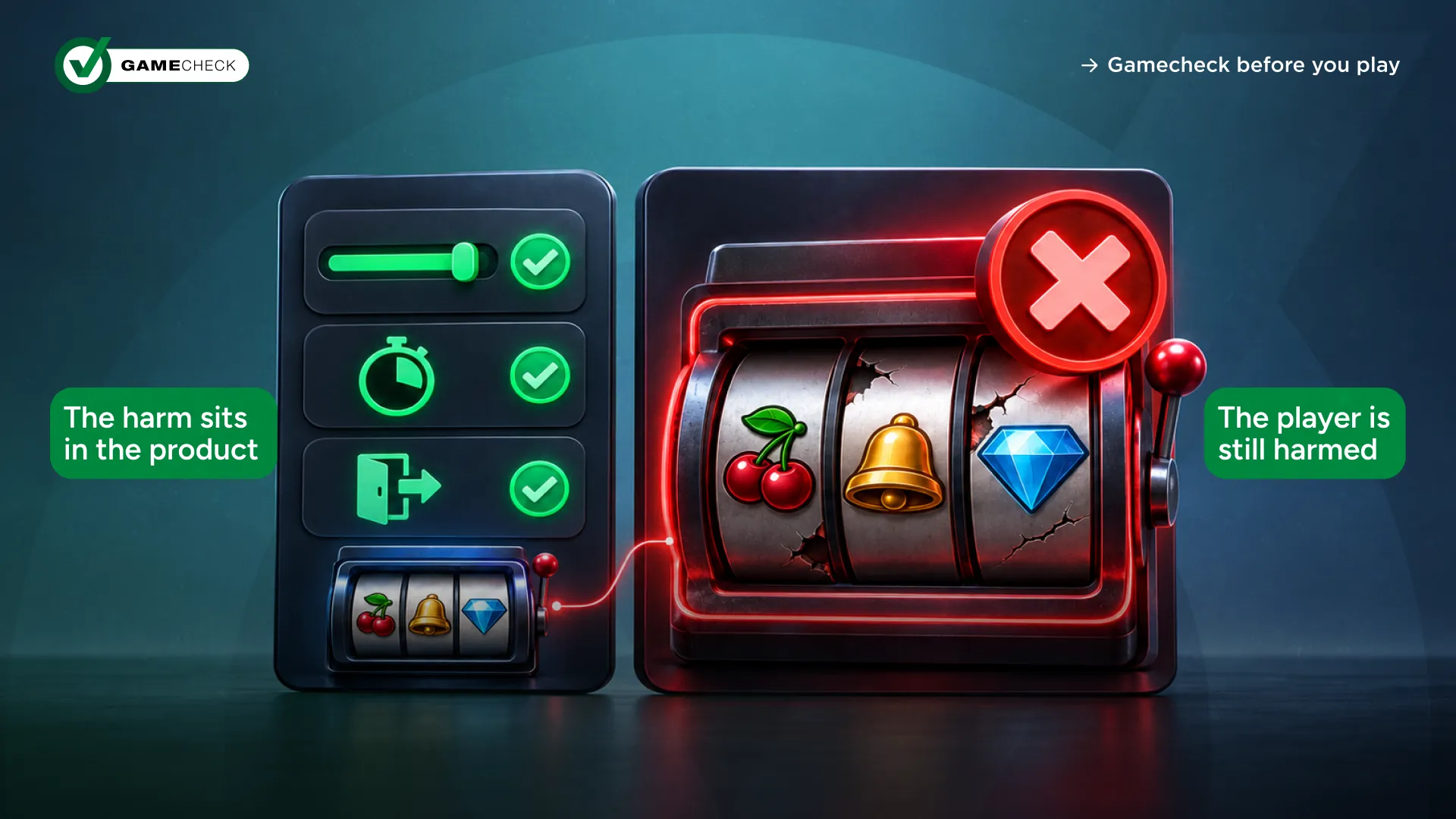
That is why a player on a fake game is being harmed regardless of how healthy their session looks. They might set sensible limits, play for twenty minutes, and log off on time. By every behavioural measure, they are a model customer. The harm is not in their behaviour. It is in the product.
In a conversation like this, credibility comes from numbers rather than claims, so here are ours. Since launching in October 2024, Gamecheck has:
Every one of those findings comes from the same process. We gather evidence and check a selection of games in collaboration with the original game providers, because they are best placed to confirm whether a game is real or fake.
The last figure is the one we find most encouraging.
More than 1,000 online casinos changed course once the evidence was put in front of them. This figure shows us that many operators are willing to take action to protect their players from fake games, and that when they can see what is running on their sites, many act on it quickly.
SiGMA World 2026 returns to Fiera Roma for its second edition under the theme Advancing Regulated Gaming. The programme runs across five stages: the Main Stage on strategy, the Affiliate Stage on marketing and digital growth, the AIBC Stage on artificial intelligence and emerging technology, the Global Finance Stage, and, for the first time, a full stage dedicated to the Italian market, delivered in Italian. An Italian Pavilion sits on the show floor alongside it.
What makes Rome valuable is who will be in the halls together. Fake games sit at the meeting point of three groups: operators, who host the games; game providers, whose titles are being copied; and players, who carry the harm. SiGMA World puts the first two side by side for four days, which is exactly what this problem needs. The conversation about fake games cannot be had by one group alone, and very few events bring both into the same building at this scale.
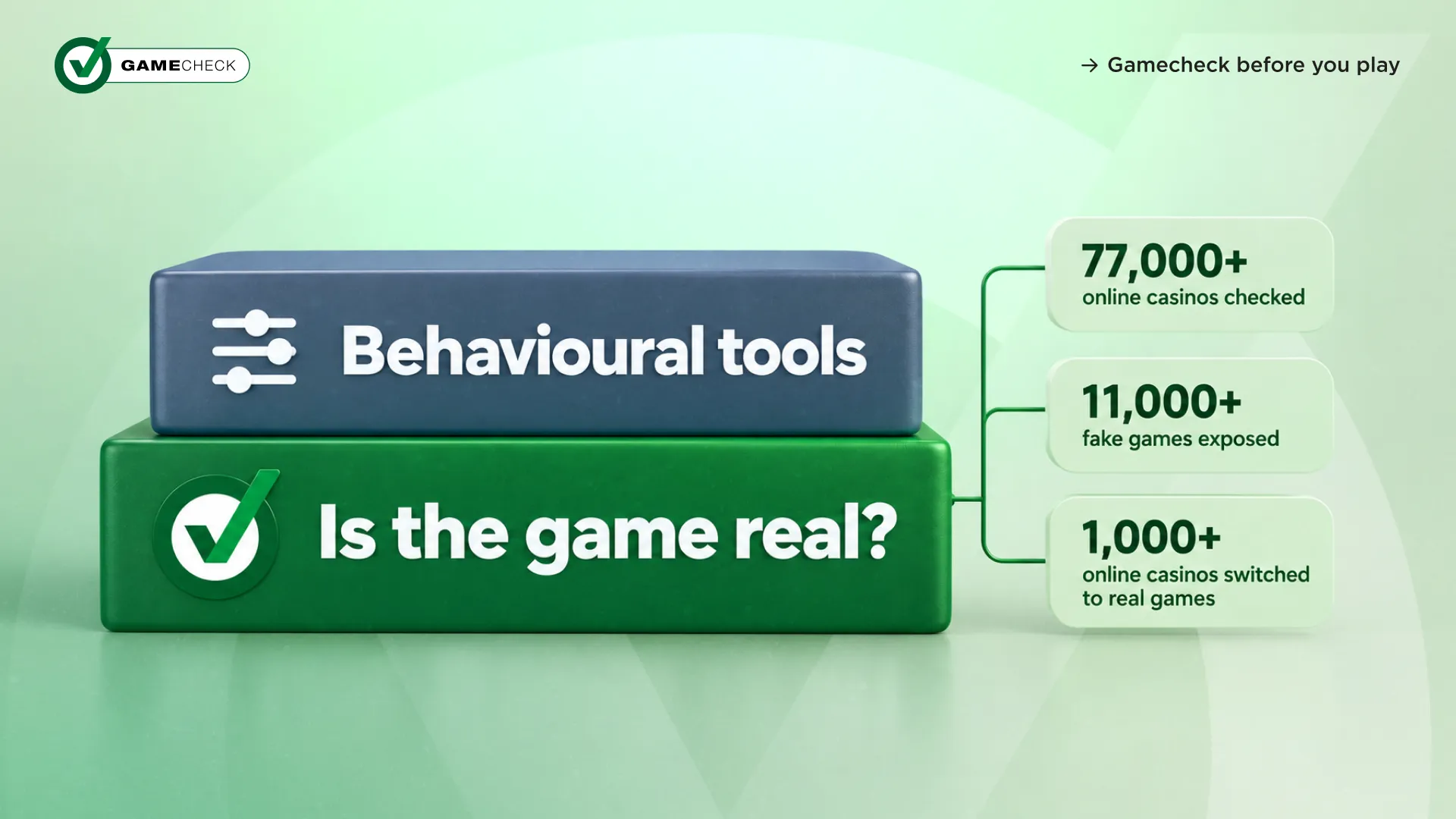
Think of player protection as two questions asked in order.
First, is the game real? Second, is the player safe while playing it? Behavioural tools answer the second question well, and they are improving all the time. But the first question has to be answered before the second one means anything, and today it is rarely asked at all.
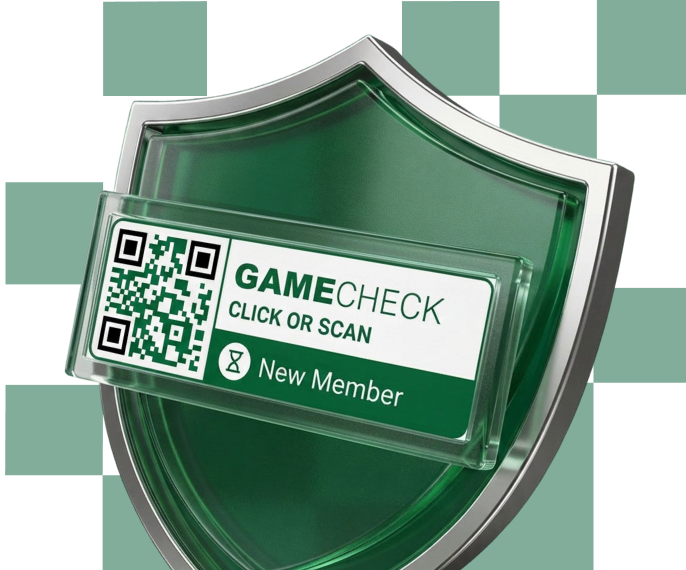
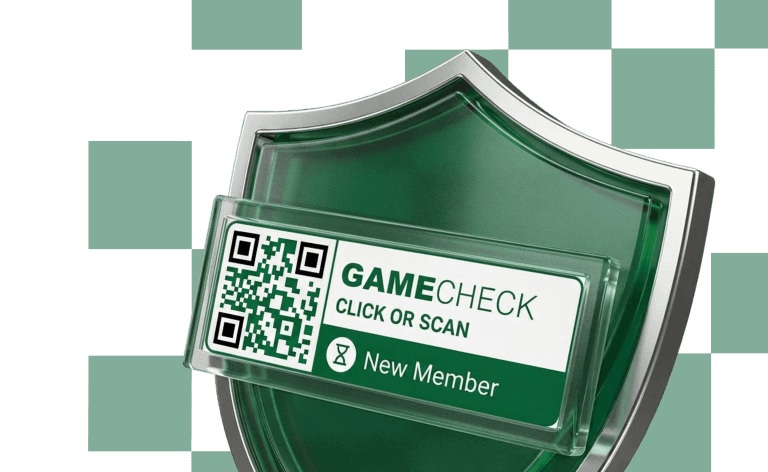
The Gamecheck SEAL is how an operator answers that first question in public. It tells players that a selection of the online casino’s games has been checked with the original game providers. Monitoring is continuous rather than a one-off audit. If even one fake game is found, the Gamecheck SEAL is removed and the operator cannot reapply until 12 months have passed. Copied SEALs are blocked, and players can check any Gamecheck SEAL by scanning it with the Gamecheck app.
For players, Gamecheck’s free tools put the answer in their own hands. The Search Tool and Chrome Extension reveal whether an online casino’s games are real before a single bet is placed, and the Gamecheck app confirms a Gamecheck SEAL is real.
The Gamecheck team will be at Fiera Roma all through the event from Monday 2 to Thursday 5 November.
Visit us in Hall 1, Stand 1024. Here is who you can expect to meet.
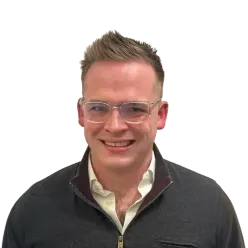
Jack Crabtree, Head of Sales, Gamecheck
Talk to Jack about the Gamecheck SEAL and how it shows your players that your games are real.

Elizabeth McDermott, Partnerships Manager, Gamecheck
Talk to Elizabeth about working together to keep fake games away from players.

Umur Ozan, Creative Strategist, Gamecheck
Talk to Umur about how you can show players that your games are real.
Ask the team to walk you through the Gamecheck SEAL in action, from the check itself to what players see on screen, or try the Gamecheck app, Search Tool, and Chrome Extension for yourself.
Player protection has spent years learning to spot harm in the way people play. A fake game cannot be caught by watching session data, because nothing in the session data looks wrong. It can only be caught by asking whether the game is real, and by asking the game providers who made it.
That is the conversation we are bringing to Rome. It is constructive, it is backed by evidence, and it is one that operators and game providers can act on together, starting now.
If you are an operator, a game provider or anyone who works on player protection, and you’re at SiGMA World 2026 next week, come and find us. The Gamecheck team will be at Fiera Roma for the whole event, from Monday 2 to Thursday 5 November, at Hall 1, Stand 1024. Stop by to talk fake games, see how Gamecheck helps protect players, or simply say hello.
After the event, look out for our recap, “After Rome: what SiGMA World told us about fake games”, where we’ll share the evidence behind the argument we brought with us.
Published On: Oct 27, 2026
Updated On: Nov 03, 2026
When and where is SiGMA World 2026?
SiGMA World 2026 runs from Monday 2 to Thursday 5 November at Fiera Roma, Via Portuense 1645-1647, Rome. The event expects more than 30,000 delegates, 550+ speakers, and 1,200+ exhibitors.
What is a fake game?
A fake game is a copy of a popular online casino game running without the involvement of the game provider that made it. It looks the same as the original to players, but the original game provider has no part in how it works.
Why does Gamecheck treat fake games as a player protection issue?
Because the harm sits in the product rather than in the player’s behaviour. A player can play responsibly by every behavioural measure and still be harmed if the game in front of them is fake.
What is the Gamecheck SEAL?
The Gamecheck SEAL is a trust badge that online casino operators display to show that Gamecheck has checked a sample of their games in collaboration with the original providers and found them to be real. It carries a domain linked QR code that players can scan using the Gamecheck app to check the seal is real and active.
How can I meet the Gamecheck team in Rome?
Book a meeting with the team through the link above, or visit us at Fiera Roma during the event. You can also try the Gamecheck app, Search Tool, and Chrome Extension with the team on site.
Join operators using Gamecheck SEAL to protect players and grow credibility.