Part 10: Gamecheck identifies 5000 fake online casinos in Brazil


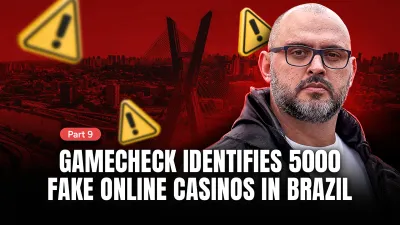
Ten weeks ago, Gamecheck set out to answer a simple question: how many online casinos operating in Brazil are offering fake games. The answer, once all the evidence was gathered, was larger than most players expected. In the first half of this year alone, Gamecheck identified 5,000 fake online casinos targeting Brazilian players.
Five hundred of the five thousand online casinos identified in our H1 findings have now been named, in batches of fifty a week over this ten-part investigation. That's deliberately paced so players can check a manageable list against their own accounts. A single list of thousands of names is not something a player can realistically act on. Fifty online casinos a week is something a player can actually check against their own account, one name at a time. This is the tenth and final batch, and with it, this exposé comes to a close.
The scale of what this investigation uncovered is worth restating plainly. Gamecheck monitors more than 43,500 online casinos worldwide and has completed over 257,600 checks to date. Out of that global picture, Brazil's H1 numbers stood out. A total of 5,000 fake online casinos were identified offering fake games to Brazilian players in the first six months of the year, and this series has focused on the first 500 of those, with Gamecheck's monitoring continuing on the rest.
Ten focused instalments, each small enough to check against a player's own account in a single sitting, do more to protect the people this investigation was written for.
That scale extends well beyond this one series:
Each batch has followed the same process, applied consistently from part one through to this final instalment. Gamecheck tests a selection of games from each online casino and checks the findings directly with the original game providers, who are best placed to confirm whether the games in operation are real or fake. Nothing in this series is based on guesswork, on comparing how an online casino looks against known scam templates, or on assumptions about an operator's intentions. It is based on evidence gathered and confirmed by the providers themselves, one online casino at a time.
Fred Azevedo, Gamecheck's Brand Ambassador for Latin America, has contributed to this series throughout, helping connect the investigation's findings to what Brazilian players are actually experiencing on the ground. He has shared each instalment, including the accompanying list of fifty rogue online casinos, with his social media followers in Brazil, extending the reach of this investigation well beyond the blog itself.
His involvement has kept this series grounded in the realities of the Brazilian online casino gaming market, rather than treating it as a numbers exercise conducted from a distance. Ten weeks of publishing fifty names at a time is, in part, a reflection of that: a decision to keep the investigation usable for the players it is meant to protect, rather than purely for a single dramatic headline.
Working through 500 online casinos over ten weeks has surfaced some consistent patterns worth noting, even without naming individual operators or the game providers whose titles were copied.
The first is naming. A striking number of the online casinos identified across this series use short, alphanumeric domain names, strings of letters and numbers rather than recognisable brand names. This is not accidental. Names like this are cheap to generate, easy to replace when a domain is taken down, and difficult for a player to recognise or search for after the fact. When one of these online casinos disappears, the players who used it are often left with no clear way to identify who they were dealing with.
The second is speed of turnover. Several domains identified in the earlier weeks of this series were already inactive by the time later instalments were being prepared. Fake online casino operators tend not to build for the long term. They build for a window of activity, then move on to a new domain with a similar structure. This is one of the clearest reasons a static list, however thorough, cannot be the end of the story.
The third is presentation. Across all ten parts of this series, the online casinos checked were rarely amateurish in appearance. Slick graphics, familiar-looking bonus structures, and interfaces that mimic well-known, established platforms were common. Visual polish told players nothing about whether the games behind that interface were real. That distinction only became visible once Gamecheck tested the games directly and checked the results with the providers themselves.
The fourth is scale through repetition rather than originality. Many of the sites named across this series share near-identical templates, differing only in a handful of characters in the domain name. This points to fake online casino operators running several online casinos from the same underlying setup, rather than each online casino representing an entirely separate operation. For a player, this means that avoiding one fake online casino by name offers little protection against the next one built from the same template, which is precisely why checking the domain in front of you, every time, matters more than remembering a list of names.
This is the last batch of rogue sites identified in this investigation. As with every instalment in this series, the online casinos below are listed alphabetically, and only their Gamecheck profile pages are clickable. Players can use these links to check any of these operators directly.
With this batch published, all 500 online casinos identified across this ten-part series are now public.
Five hundred names is a useful record, but it is not the full picture. The 5,000 sites offering fake games identified in H1 alone means that the sites named across these ten weeks represent one slice of a much larger problem, and new fake online casinos continue to appear after any list is published. This is why Gamecheck built tools that check in real time. Gamecheck's free tools let any player check an online casino before they deposit, rather than after something has already gone wrong.
The Gamecheck Search Tool takes a single domain and returns a clear result: real games in operation, fake games detected, or a check still pending. It takes seconds, and it does not require a player to know anything about the operator beyond the web address in front of them.
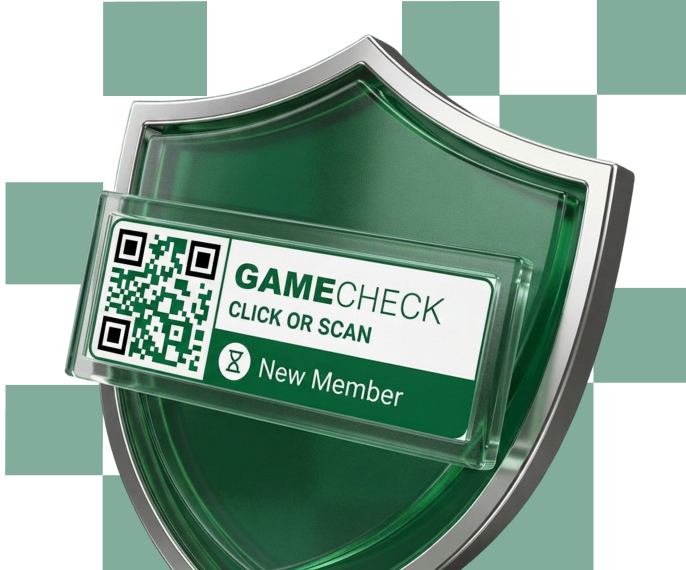
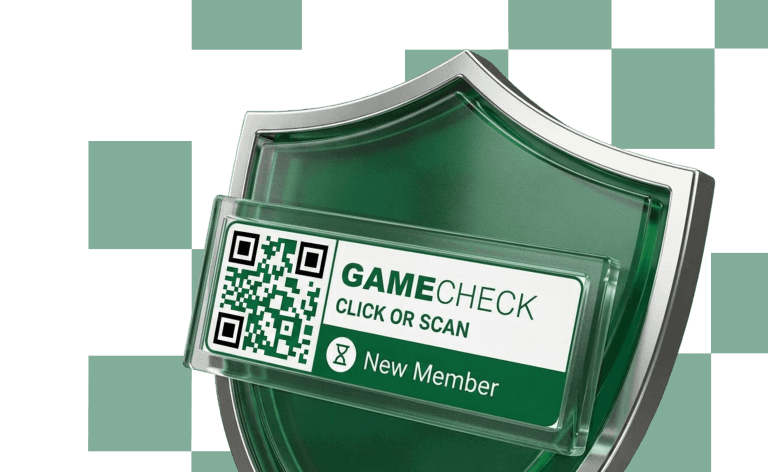
The Gamecheck Chrome Extension extends this further for players who move between multiple online casinos in a single session, returning live results without needing to leave the page they are on. For players who prefer to check on their phone, the Gamecheck app carries the same database and adds one further layer: the ability to scan a Gamecheck SEAL directly, confirming that the seal displayed is genuinely linked to that domain.
Players who have used any of the online casinos named in this series, or in the nine instalments before it, can check their own casino history through the Gamecheck Search Tool. Ten seconds spent checking a domain is a small price for the certainty of knowing whether the games behind it are real.
None of the sites offering fake games named across this series, carried a Gamecheck SEAL. That is not a coincidence. The Gamecheck SEAL is only awarded to an operator once a selection of that operator's games has been checked and confirmed as real by the original game providers, and it is issued individually, per operator, rather than applied across a network of connected online casinos.
Each Gamecheck SEAL is tied to a specific domain and logged on the blockchain, which means a copied image of a seal, pasted onto a different online casino, can be identified and exposed as a copy the moment a player scans it through the Gamecheck app. If an operator carrying the Gamecheck SEAL is later found to be offering fake games, the seal is removed immediately, and that removal is also recorded.
Ten weeks, ten instalments, 500 out of the 5000 rogue sites named and shamed. This series set out to make an overwhelming number manageable, fifty names at a time, and that work is now complete. What it leaves behind is not a finished list but a working method: check before you play, and keep checking, because the online casinos change but the process does not.
Fake sites in Brazil favour short-lived, alphanumeric domains over recognisable brand names. And they rely on players not checking, because the moment a player does check, whether through the Gamecheck Search Tool, the Chrome Extension, or a Gamecheck SEAL scan in the app, the evidence takes over.
Gamecheck will continue to monitor the online casino gaming market in Brazil beyond this series, and further investigative reporting into other markets and other operators is already in preparation. For now, players are encouraged to check any operator they currently use against the Gamecheck Search Tool, share this series with anyone in their circle who plays online, and look for an active, scannable Gamecheck SEAL before depositing on any new online casino. Check any online casino now with the Gamecheck Search Tool.
Published On: Sep 20, 2026
Updated On: Sep 21, 2026

-400x225.webp)
-400x225.webp)
How many fake online casinos has this investigation named in total?
This ten-part series has published 500 fake online casinos in batches of fifty a week, drawn from the 5,000 fake online casinos Gamecheck identified offering fake games to players in Brazil during the first half of the year.
How does Gamecheck confirm that a game is fake?
Gamecheck tests a selection of games from each online casino and checks the results directly with the original game providers, who are the only party able to confirm whether the games in operation are real or fake. Nothing in this series is based on appearance or assumption.
How can I check whether an online casino I use is on this list?
You can check any online casino using the Gamecheck Search Tool, which returns a clear result of real games in operation or fake games detected in seconds. For ongoing protection, the Gamecheck Chrome Extension checks online casinos as you browse, and the Gamecheck app lets you scan a Gamecheck SEAL directly to confirm it is linked to that domain.
Join operators using Gamecheck SEAL to protect players and grow credibility.