The global online casino gaming industry continues to grow at an accelerated pace. Yet, with this expansion comes increased complexity and more opportunities for fraud.
In analysing Gamecheck’s data from 2025, a concerning pattern emerges: fake games are becoming more widespread, and the demand for independent verification systems has never been higher. Gamecheck's findings highlight the scale of game piracy, and underscore the urgent need for greater transparency within the industry.
This is what the numbers show.
Verification activity across the Gamecheck platform has expanded significantly:
Following investigation and public reporting, 345 online casinos switched to real games after fake titles were identified. This suggests that transparency mechanisms can influence positive operator conduct and alignment with real games.
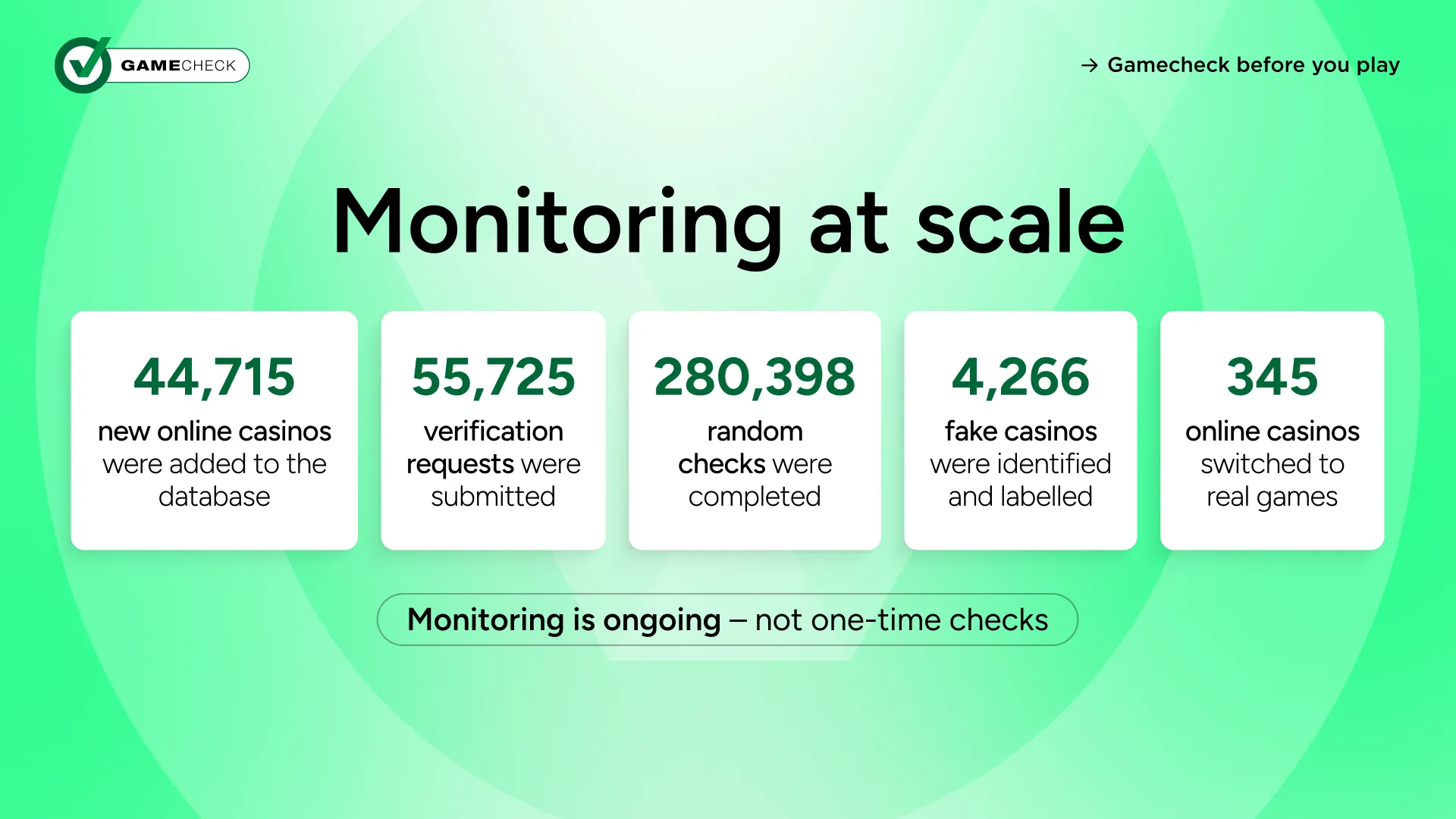
Gamecheck’s monitoring activity reflects growing demand for independent verification.
Gamecheck’s monitoring activity identified, on average, 300+ fake games per month across reviewed domains. Importantly, exposure has also driven behavioural change.
Here are some of the key insights from the data:
The Gamecheck SEAL was introduced as a visible signal that a selection of games had been checked and confirmed as real by the original game providers. By the end of 2025:
The model is designed to prioritise ongoing compliance over static certification.
In May 2025, Gamecheck launched its mobile application to provide real-time access to verification information. By year end:
The Gamecheck app allows users to verify the Gamecheck SEAL and check the online casino’s status information directly, reducing friction in the verification process.
In parallel, the Gamecheck Chrome Extension enabled real-time browser checks, allowing players to review a site’s status without leaving the page they are on.
Player education remains a central pillar of our anti-fake game strategy.
Between January 2025 and January 2026:
These engagement levels indicate sustained interest in investigative reporting.
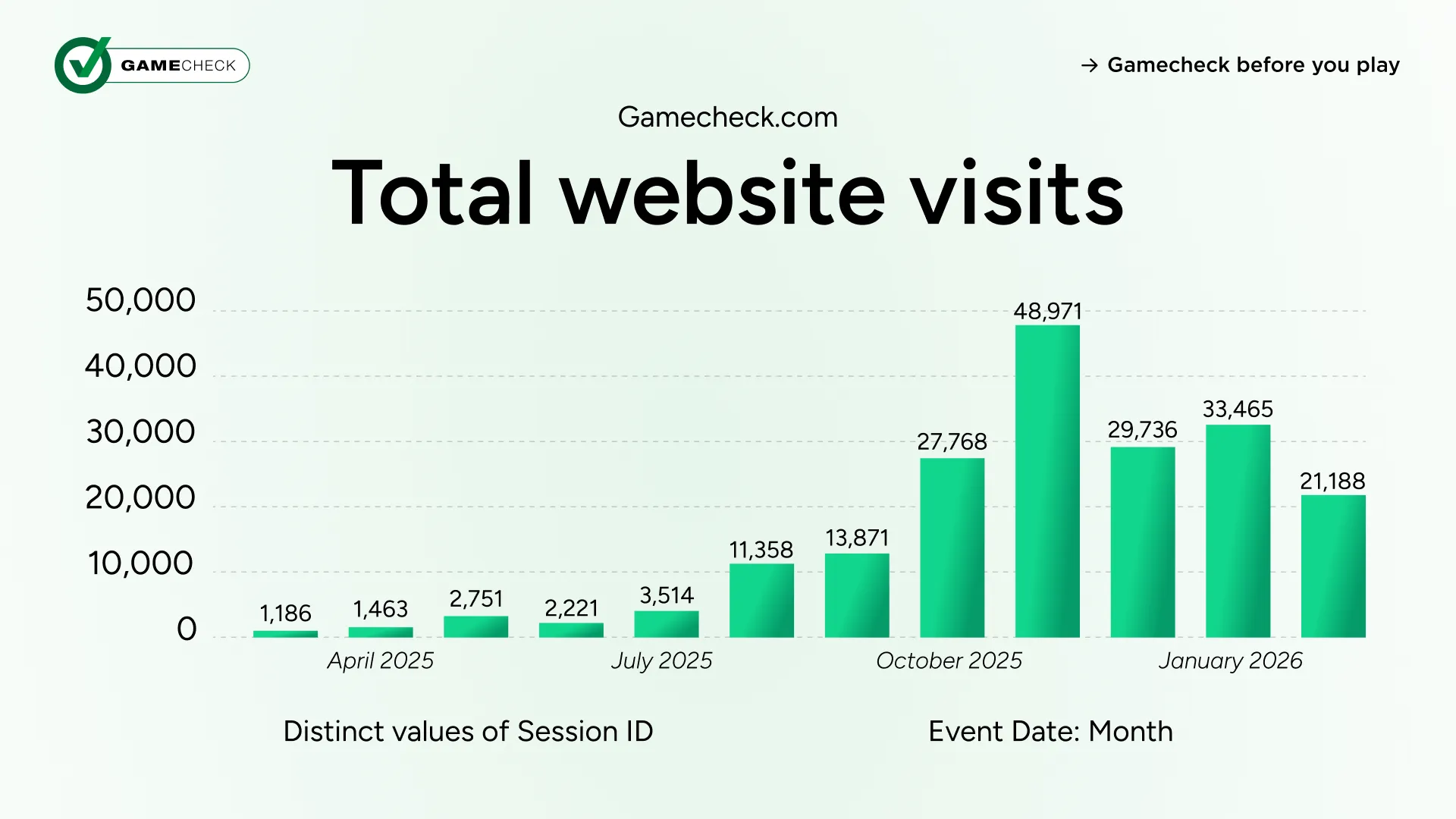
Platform-wide engagement also increased:
The data suggests that verification behaviour is becoming routine rather than reactive.
Country-level data reveals notable geographic trends. The strongest engagement with the Gamecheck platform and Gamecheck app was recorded in:
Mexico
89,733 users | 144,100 visits | 34,510 app users | 70,616 app visits
Brazil
28,810 users | 40,754 visits | 5,648 app users | 12,646 app visits
Turkey
23,224 users | 34,378 visits | 7,305 app users | 14,118 app visits
Serbia
13,644 users | 20,000 visits | 663 app users | 1,941 app visits
United Kingdom
2,384 users | 5,782 visits | 154 app users | 744 app visits
United States
645 users | 892 visits | 444 app users | 320 app visits
The data indicates stronger engagement in emerging or higher-risk markets compared with mature jurisdictions. The figures suggest that demand for verification tools may be higher in regions where regulatory oversight structures are newer and still evolving. In these markets, player uncertainty around game authenticity may be more prevalent.
Several conclusions emerge from the 2025 dataset:
The online casino gaming industry is expanding rapidly, and Gamecheck's data reflects that scale. These figures demonstrate that transparency must grow at the same pace as the market itself. Monitoring activity, exposure of fake games, and structured player education are becoming core safeguards that support fair play across borders.
As more players move online, evidence-based checks and independent scrutiny will play a greater role in maintaining trust. Gamecheck will continue to focus on what it does best - identifying real games, exposing fake casinos that offer fake games, and making information accessible, so players can make informed decisions before they play.