
A player opens a familiar game on an online casino. The logo, the artwork, and the soundtrack all look right, and nothing about the screen suggests that what sits underneath might have been changed. That familiarity is exactly why fake games are hard to spot.
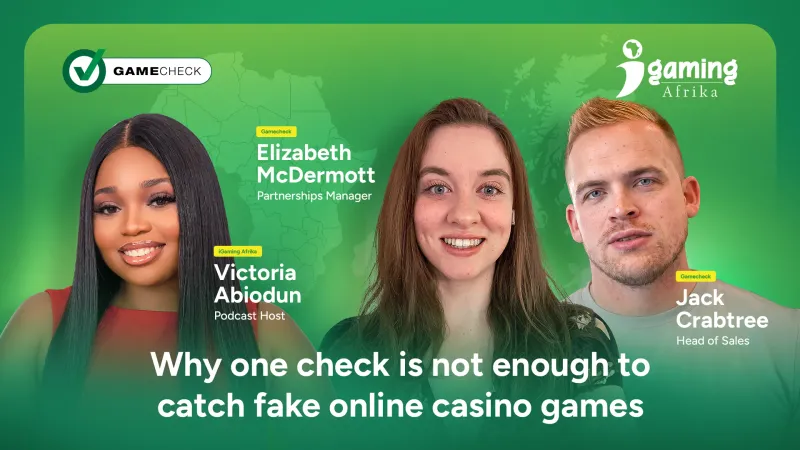
In episode nineteen of the iGaming AFRIKA podcast, titled ‘The Game Looks Real. Are The Odds?’, host Victoria Abiodun spoke with Gamecheck's Head of Sales, Jack Crabtree, and Partnerships Manager, Elizabeth McDermott, about how fake games reach online casinos in the first place, and why a single check at the start is rarely enough to keep them out.
Their conversation covers familiar ground for anyone who has read this blog’s earlier piece on copied branding, but from a different angle. That article looked at how a fake game is built to look convincing. This one looks at how it actually finds its way onto an online casino’s site.
Watch the full episode on YouTube or read the conversation in iGaming AFRIKA's article.
Before joining Gamecheck, Elizabeth had not thought about fake online casino games as something to watch for. What surprised her was that some people already working in the industry, including operators and game providers themselves, had not fully considered the problem either.
A fake game can borrow a well-known provider's reputation while concealing a different product underneath, and an operator may accept one into its catalogue without realising it, whether through a weak point in its supply chain or a deliberate substitution further down the line. A familiar impression is often enough to lower a player's guard, long before anything underneath is actually checked.
Jack added that fake games cannot be dismissed as poor copies. Some of the people behind them have hired developers who worked on the real versions, and artificial intelligence has made reproduction easier still, so the usual giveaways, a rough graphic or an off soundtrack, are far less reliable than they used to be.
According to Jack, some operators buy fake games knowingly. Others believe they have found a good deal through informal channels, such as being offered a game at a noticeably better rate than a real licence would normally cost.
A go-between might present this as a simple cost saving, without mentioning that the lower price comes from the game being altered to pay back less than players expect, though exactly how much is not something this article goes into.
An operator weighing a cheaper offer against a real licence has every reason to ask where the terms actually come from, and whether the original provider has authorised that specific version at all.
Jack described operators who are not aware a game is fake and only realise later that they were misled. A casino does not have to start out dishonest for a fake game to end up on it.
He also pointed out that the risk does not end once a supplier has been checked. An operator could begin with real games, then swap in copies later, or switch on fake versions only for certain players, often ones known to spend heavily.
A check carried out early could find only the real version and miss what replaces it afterwards.
This is the basis of Jack's's main criticism of relying on a single inspection. Independent testing has value, but it does not remove the need to look at what an operator actually serves once that first approval is granted.
He argued that operators should not know in advance when a check will happen, since advance notice gives them a chance to present real games for testing and substitute copies once it is over. A testing visit that is announced beforehand leaves little incentive for an operator running a fake game to keep it switched on during that window.
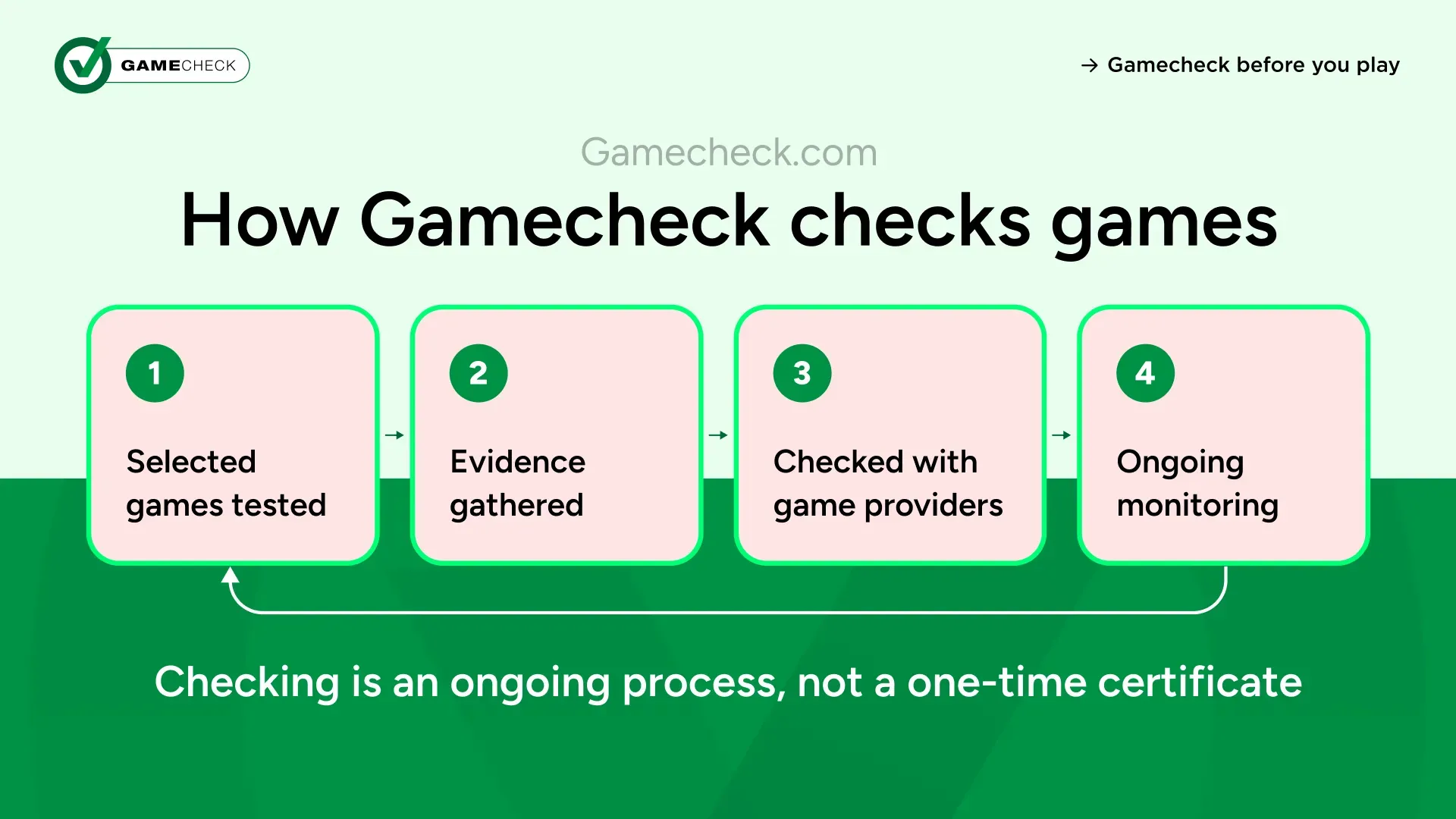
Gamecheck's own approach is to enter casino sites as ordinary players would, without revealing in advance which games it plans to look at. The evidence it gathers is sent to the original game provider, since the provider is the only one able to say whether a game actually belongs to them.
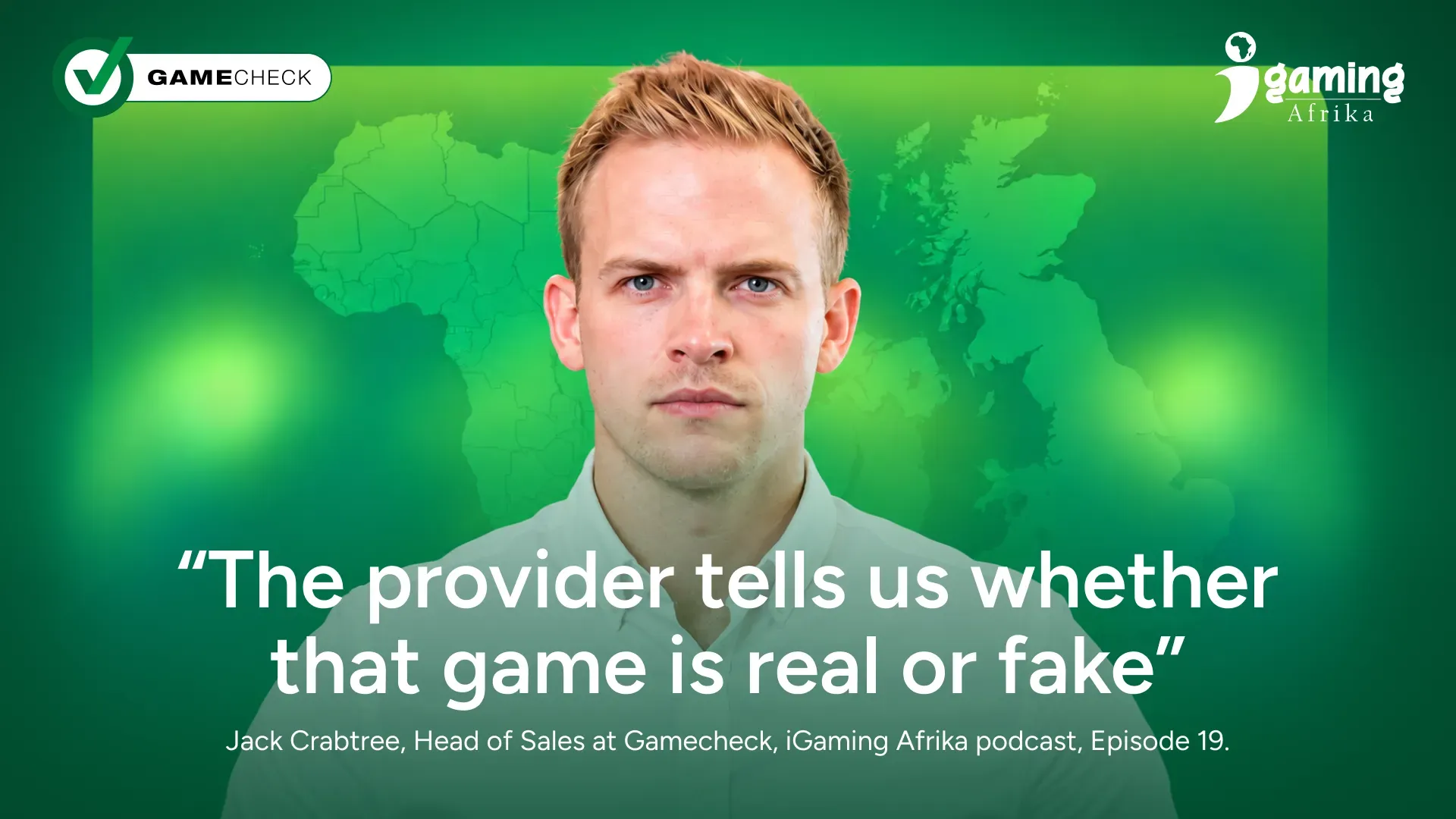
As Jack put it, “The provider tells us whether that game is real or fake.” Working this way, rather than taking an operator's word for it, is what gives the check its weight.
A Gamecheck SEAL on an online casino signals that a selection of games has been verified as real by the original game providers, not that every title in the catalogue has been individually examined. Jack was clear that an operator without the SEAL should not automatically be treated as suspect.
Operators who display it are making a public statement about how real their games are, and are prepared to be checked on that basis. A closer look at how the SEAL itself works, including how players can check it against the site they are actually on, is one for another article, which will also cover what a player can check for themselves once they spot one.
Elizabeth encouraged African markets to learn from problems that have already played out elsewhere, as investment in the region grows. Her concern is that businesses with more resources and influence than players could take advantage of that gap in awareness.
Jack agreed that earlier mistakes in other regions offer useful lessons, but added that protection also needs to reflect local conditions, including how widely players across Africa rely on phones to play. A verification process built mainly around a desktop website is less useful in a market where most players are checking a game from their phone.
Elizabeth argued that protecting players takes more than a statement on an operator's website about how much it values them. Businesses need to show evidence behind that claim, since a fake game can damage trust in a real business when players associate the two.
She closed by reminding listeners directly that they are the most important part of this system, not an afterthought to be reassured after the fact. She also framed player education as part of that investment, encouraging players to ask questions, use the tools available to them, and share what they learn with others, since the iGaming industry depends on players choosing to take part.
None of the steps below depend on specialist knowledge, only on treating a good first impression as a starting point rather than a conclusion.
● Look for a Gamecheck SEAL, and remember that it reflects deeper checks on a selection of games, not a guarantee covering every title
● Treat an unusually good deal or an unfamiliar version of a known game as a reason to look closer, not a reason to relax
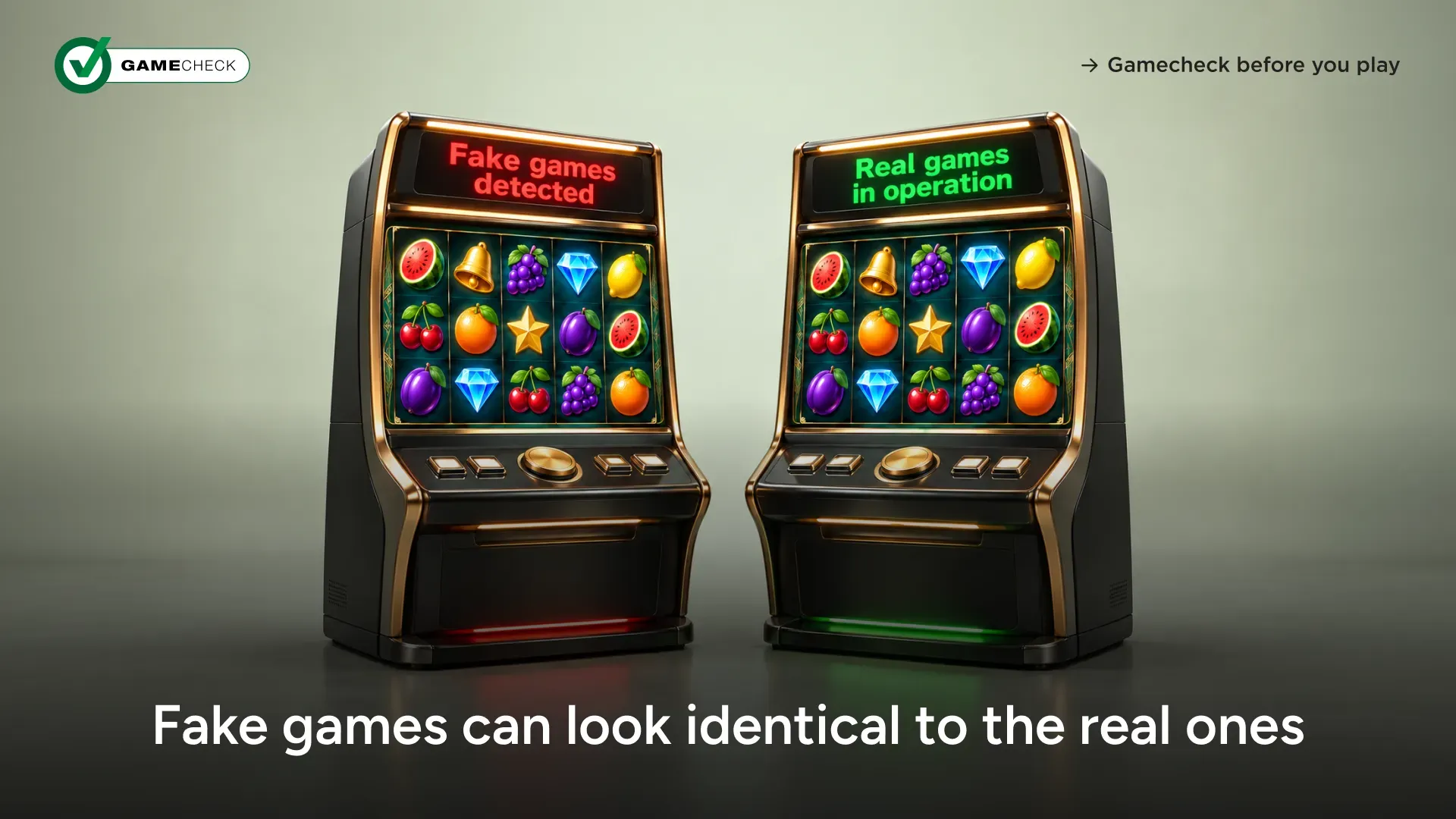
● Use Gamecheck to check an online casino's current status, shown as real games in operation, fake games detected, or pending checks
● Share what you learn about checking games with other players, since awareness tends to spread the same way fake games do
The clearest point to come out of this conversation is that checking once is not the same as checking continuously. A fake game can pass an early inspection and still reach a player later, particularly where an operator knows a test is coming.
That is why Gamecheck's process is built around continuous monitoring rather than a single certificate issued at the start. Gamecheck gathers evidence without warning and checks a selection of games directly with the original game providers. Every online casino holding the Gamecheck SEAL is monitored on an ongoing basis, and if even one fake game is found, the SEAL is removed.
Gamecheck is an independent provider of tools, research, and education that helps online casino players determine whether online casinos offer real online casino games.
Enjoyed the episode? Visit our podcast page to find out more about our conversation with iGaming AFRIKA.
Published On: Oct 20, 2026
Updated On: Oct 21, 2026
How do fake games end up on online casinos?
Fake games can reach an online casino in more than one way. Some operators buy them knowingly, while others are offered a familiar title at a noticeably lower price through informal channels, without being told the game has been altered to pay back less than players expect. A fake game can also be swapped in after an initial check, which is why an online casino does not have to start out dishonest for a fake game to appear on it.
Why is a single check not enough to confirm an online casino’s games are real?
A one-off inspection only confirms what was available at the time of the check. If an operator knows when testing will happen, it can present real games for that window and replace them with copies afterwards. Gamecheck works without advance notice, entering sites as an ordinary player would, gathering evidence, and checking a selection of games with the original game providers, who are best placed to confirm whether a game is real or fake.
What does it mean if an online casino displays the Gamecheck SEAL?
A Gamecheck SEAL shows that a selection of the online casino’s games has been checked by the original game providers, and that the operator has agreed to continuous monitoring. It is not a guarantee covering every title in the catalogue. If even one fake game is found, the Gamecheck SEAL is removed, and the operator cannot reapply until 12 months have passed. Players can confirm a Gamecheck SEAL is real by scanning it with the Gamecheck app.
Join operators using Gamecheck SEAL to protect players and grow credibility.