Most players have a routine before signing up at a new online casino: reading reviews, comparing bonuses, checking the game library for recognisable titles. These checks say something about an operator's reputation, but none of them confirm whether the online casino and its games are real, the one thing that determines whether a player can actually win or lose fairly. That's the check players are learning to make first.
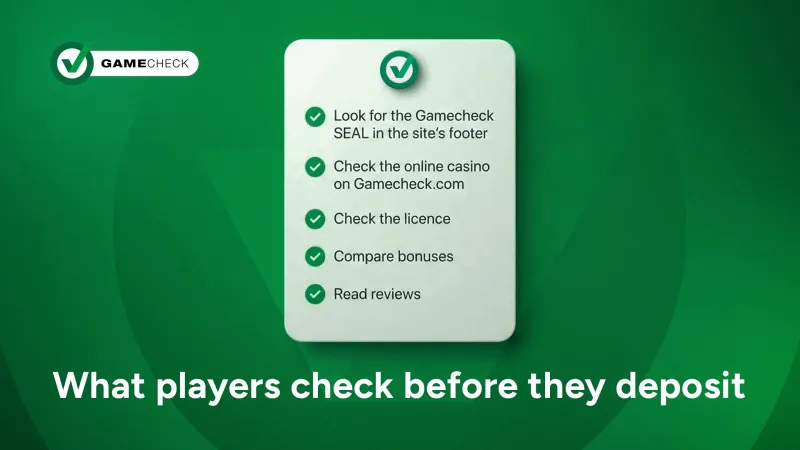
Industry research on player behaviour and online casino fraud tends to focus on a recurring set of factors that shape a player's decision before depositing:
Each of these checks plays a role, but they each answer a different question. A licence speaks to regulatory status. A review speaks to someone else's experience. A bonus comparison speaks to value. None of them speaks directly to whether the games on offer are the real thing.
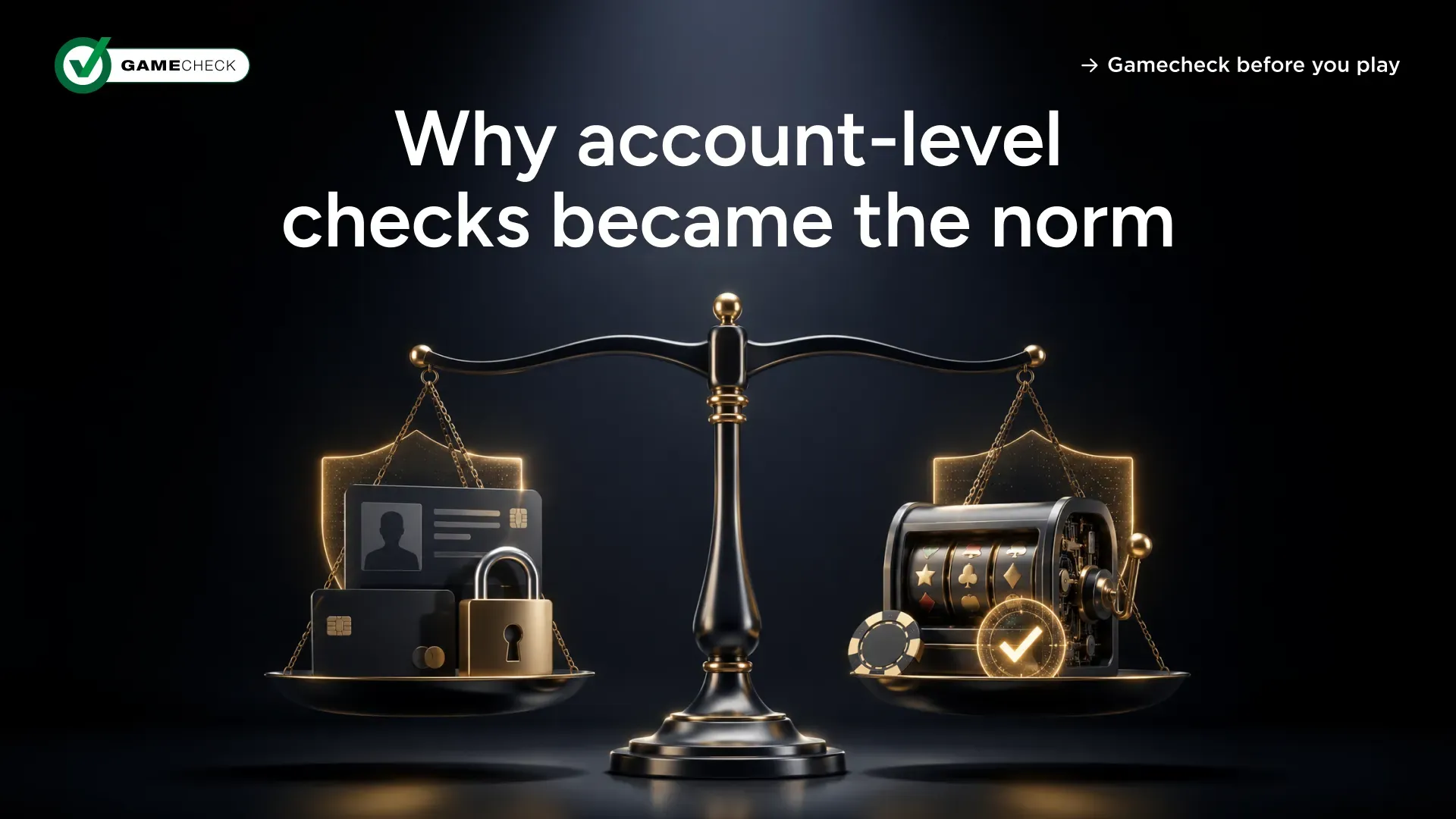
Verification steps that might once have felt intrusive, submitting ID, confirming payment details, completing extra security checks, are now treated as a normal part of opening an account. These checks exist to confirm who the player is, and they've become a standard part of how operators protect themselves and their platforms. But verifying a player's identity only covers one side of the relationship.
Just as an operator needs assurance that a player is who they say they are, a player needs the same kind of assurance about the online casino itself, namely whether the games it offers are what they claim to be. Identity verification protects the operator from fraudulent accounts. Game verification is what protects the player from fake games, and it deserves the same level of attention.
Bonuses and basic security indicators became the two things players leaned on most heavily to judge whether a site felt trustworthy, largely because identity checks gave them a sense that the operator side of things was being taken seriously. The trouble is that both of those signals can be copied just as convincingly by a site running fake games as by one running real ones.
Online casino bonuses are promotional incentives designed to attract new players, and comparing them has become a habit in its own right. Players weigh up playthrough requirements, which games count towards clearing a bonus, and any withdrawal limits attached to it, since the surface value of an offer rarely reflects what it actually works out to in practice.
A generous-looking figure can hide a wagering requirement steep enough to make the bonus worth far less than it first appears, which is exactly why comparison has become second nature for experienced players.
This kind of comparison only holds up if there's a real game underneath the bonus. Bonuses are governed by strict rules and mathematical constraints designed to stop a player simply cashing out free funds, and those constraints only mean anything if the games they're attached to are operating as they should.
A bonus tied to a fake game isn't subject to those same constraints, since the outcome of the game itself can be manipulated. In that situation, no amount of terms or withdrawal limits protects a player, because the comparison is being made against numbers that don't reflect anything real.
This is why checking whether an online casino's games are real needs to come before comparing what it's offering. Once a game is confirmed as real, comparing bonus terms is a worthwhile exercise. Before that point, comparing bonus terms on a site running fake games is comparing figures that may have been engineered to look favourable rather than to behave fairly.
The same logic that applies to bonuses applies to basic security indicators. A padlock icon or a secure connection confirms that data passing between a browser and a server is encrypted. It says nothing about what's happening inside the games themselves. An operator willing to run fake games, copying branding and code without a provider's consent, has already shown it isn't operating to the standard a legitimate business would. That same disregard for the rules tends to extend further than just the games. Where one form of integrity has been skipped, others usually have been too.
This is the connection that's increasingly shaping how players think about pre-deposit checks. A fake game isn't just a problem in isolation. It's a signal that everything built around it, the bonus attached to it, the trust signals displayed near it, may not hold up either. Checking whether the games are real has started to function as a more reliable first step than checking the bonus or the padlock on their own, because a fake game tends to expose the rest of the picture along with it.
Where a generous bonus or a secure-looking site used to be treated as reassurance in themselves, players are increasingly treating them as the second step, something to evaluate only once the games behind them have been confirmed as real.
Fake games are built to pass every surface-level check a player might run. They borrow real branding, real artwork, and a near-identical interface, and they can sit behind a perfectly normal-looking bonus offer and a secure connection. None of the standard pre-deposit checks are designed to catch that, because the difference isn't visible from the outside. It only becomes clear once a game has been tested against the provider it's supposed to come from and the result confirmed directly with that provider.
A player who checks licensing and compares bonus offers might reasonably feel they've done their due diligence. None of that, however, confirms the one thing that determines whether a game can be won or lost fairly, or whether the bonus tied to it was ever real to begin with.
There's a reasonable case that this shift is well underway, even if it's happening more visibly among certain players than others. This shift tends to show up first among more experienced players: the ones who have already had a close call with a slow withdrawal or an oddly behaving game, and who have learned that a generous bonus and a secure-looking site aren't proof of anything on their own.
For newer players, the habit is less established, largely because the option to check game authenticity hasn't historically been as visible or as easy to use as reading a review.
That's the gap Gamecheck's tools were built to close. The free search tool lets a player paste in an online casino's URL and see, in seconds, whether its games have been checked and confirmed with the original providers. The Chrome Extension does the same thing without a player needing to leave the page they're on. These tools answer one specific question: are the games real.
Bringing game authenticity into a player's existing routine doesn't mean replacing any of the checks already being made. Licensing, reviews, and bonus comparisons all still have a role to play. What changes is the order: checking that the games are real comes first, and only once that's confirmed does it make sense to weigh up which bonus offers the better deal.
As account-level verification became routine in response to the scale of identity fraud in the industry, it's reasonable to expect game-level verification to follow a similar path.
Players who already check who they're dealing with are well placed to check what they're playing, too.
The checks most players have relied on until now, checking licensing and comparing bonuses, remain essential. But checking whether an online casino and its games are real matters just as much. A fake game is a sign that everything built around it, including the bonus, may not hold up either, which is why checking the games comes first and comparing what's on offer comes second. Closing that gap takes a few seconds with a free tool, and it answers the one question none of the usual checks can: is this game real?
A licence relates to how an operator is permitted to run its business. It doesn't confirm, on its own, whether the specific games on offer have been supplied by the providers they claim to come from. Those are two separate questions, and checking one doesn't answer the other.
Yes. Fake games are designed to copy the branding, artwork, and interface of a real game closely enough that the difference isn't visible during normal play. Confirming authenticity requires checking the game against the original provider, not just observing how it looks or behaves on screen.
A bonus is only meaningful if there's a real game behind it capable of delivering a fair outcome under normal wagering constraints. If the games on a site aren't real, any bonus offered on those games isn't either, regardless of how generous the headline figure looks.
Yes. Comparing bonuses only tells a player something useful if the games behind the bonus are real. Checking game authenticity first means any bonus comparison that follows is actually meaningful.
Using Gamecheck's free search tool or Chrome extension takes a matter of seconds. A player can check while browsing, and see straight away whether its games have been checked with the original providers.
Published On: Jul 22, 2026
Updated On: Sep 14, 2026
Join operators using Gamecheck SEAL to protect players and grow credibility.